Saturday, September 14
We have had some difficulty establishing consistent data connections on this trip, and so I will be posting observations as I can rather than trying to spread them out one per day as I normally might do.
I suppose I should explain a bit about who we are and how we got here. The organizer and instigator of this trip is my sister Judy, who has made several visits to Europe. One of those trips included three teenaged grandchildren, which establishes her as an accomplished and resourceful traveler. It was she who, about a year ago, began to promote the idea of a family trip.
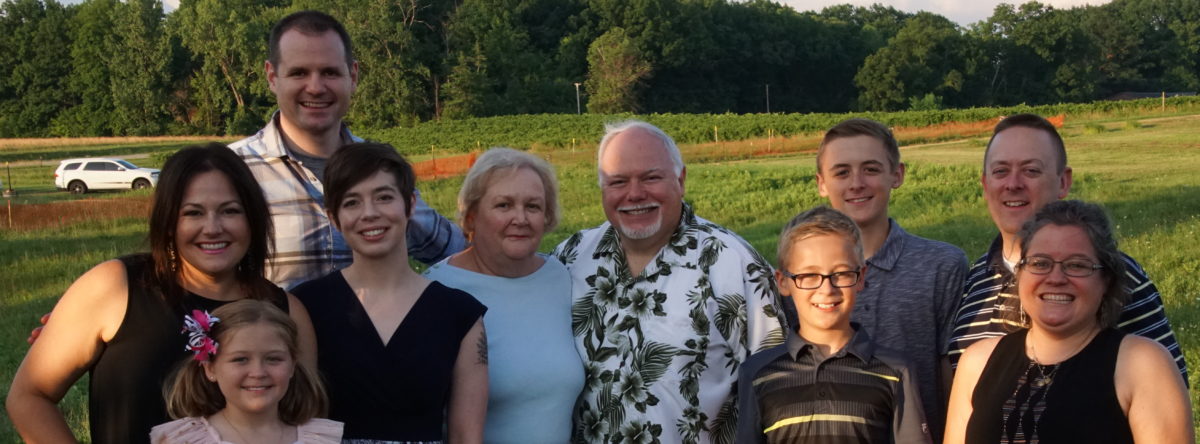
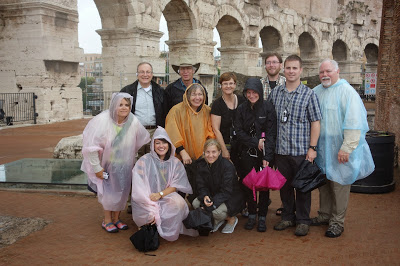
Our group includes two branches of the Lavezzi family tree. Our third cousin John, his wife Elaine, and members of their family group make up six of us; the other five are Judy, her daughter Kelley, her husband Lew, my daughter Noël, and me.
We are linked by Costantino Lavezzi and Rosa Raggio, the great-great-grandparents of John, Judy, and me. He came from Soglio, she from Romaggi, and eventually they settled in Bettola. All three towns are north of Genoa: Romaggi is the smallest, Bettola the most remote. We will start in Rome, go north to the ancestral cities, and spend a few days in Genoa itself.
While in Rome, We have tours scheduled; and not just tours, but serious walking tours. (How else does one earn one’s gelato?)
We are staying in a convent, and the sisters have Mass a few days a week. Several of us joined them for this morning’s Mass. They have a little chapel with an electronic keyboard. They weren’t using the keyboard, but Sister Rosa plays a pretty good guitar.
Today’s tour took us to three sites that emphasize Rome as both an ancient capital and the heart of what was then an undivided Christianity. None of these spots allowed photographs, so this will be the least-photographed part of the trip. And that’s unfortunate, because photos would be striking. I’ll try to make up for that with some weblinks.
Judy made the arrangements for all our tours, all with Walks of Italy; they offer fluent English-language guides and priority entry before the lines that accumulate at most places. Our guide for today was Mike, who was born in the States to an American father and an Italian mother and has spent most of his life in Rome.
The first part of the tour was a visit to the Priscilla Catacombs, which derive their name from the family that donated the grounds to the Church in the second century. Now the entrance is part of a convent, and we had a chance to meet Mother Superior, a sprightly 92-year-old who doubles as the gift shop clerk.
It’s estimated that these catacombs include burial places for about 40,000 early Christians. Many of them are on the 2nd, 3rd, and 4th levels down, which are still being excavated and explored; only the first (top) level is on the tour. Still, there are plenty of catacombs there to be seen.
Evidently, archaeologists discern three stages in the uses of the catacombs as burial grounds. In the first, everyone was equal (mostly poor) and burial spaces were pretty much the same, and plain. In the second, Christians with more money were able to arrange preferential spaces and perhaps a bit better markings. In the third, the more well-off Christians were able to arrange fairly substantial spaces and commission works of art for their spaces.
It was this third stage that produced some of the earliest Christian art. Among the interesting items are what is thought to be the earliest existing image of the Virgin Mary and a picture of what appears to be a female priest or minister. Obviously, this second one is of some interest today, as Catholicism considers the role of women in the modern church.
The website at catacombepriscilla.com/inglese has a nice slide show that shows what we saw. It doesn’t communicate how confined the space is, and the photos look brighter than the site looked to our eyes.
Although the catacombs were pretty somber, our next visit went beyond that to the macabre. We went to the monastery of the Capuchins, one of the Franciscan orders. The Capuchins believed that the Franciscans of the period were beginning to get soft, and they practiced a sort of no-holds-barred bodily denial. They buried their dead below ground until all that remained were bones, collected them, and then reused the space. (A practice not unique to them–remember Hamlet with Yorick’s skull in the graveyard?) In the mid-19th century, Rome officials decided that this was a health hazard and ordered the monks to clean up their act. The monks collected the bones of their deceased brothers and arranged them into artistic exhibits with religious themes. Odd, but interesting!
About 150 years ago, a young American reporter named Samuel Clemens visited Rome with some American compatriots; he published his observations as The Innocents Abroad under his pen name of Mark Twain. Of the Capuchin Crypts he wrote, “Here was a place for sensitive nerves! . . . There would be stirring times here for a while if the last trump should blow. Some of the brethren might get hold of the wrong leg, in the confusion, and the wrong skull, and find themselves limping, and looking through eyes that were wider apart or closer together that they were used to.”
It wasn’t so funny for us. It’s one thing to look at the crypts in photos. (There are many websites: search “Capuchin crypt Rome, or look at this website to get the general idea.) But for me, at least, being in the actual presence of so many bones was quite different from seeing the pictures.
One of the main displays in the Capuchin museum is a painting by Caravaggio of “St. Francis in Meditation,” in which he holds–of course–a skull. To these friars, all this is instructive rather than morbid, and I don’t mean to belittle it: thinking about our mortality can be good for us, and the crypts certainly promote it. Just in case you’ve missed the point, they even have a sign among the bones reminding you, “Quello che siete fummo, quello che siamo sarete”: “What you are we were, and what we are you will become.”
We were ready now for the Basilica of St. Clement. Clement was the third Pope after Peter; many Catholics know his name from one of the Eucharistic Prayers used for Mass. The present basilica was built in the 12th century. Hundreds of years later, the rector of the basilica, hearing water running underneath, did some exploration and found that this more modern basilica had been built over another, from the fourth century. Once they got that space excavated, archaeologists dug down deeper and learned that the fourth-century basilica had been built over a second-century temple to the god Mithras, who was the subject of his own cult within the pagan religion of Rome.
Mithras was a Persian god who was the center of a cult within the Roman religion which was apparently pretty friendly to early Christians. (Like Christianity, Mithraism seems to have been centered around sacrifice and a ceremonial meal.) All religions use symbols, and Mithras had his own trademark image called the “tauroctony”: it shows Mithras cutting a bull’s throat as a serpent attacks the bull and a scorpion stings the bull’s privates. (You know the expression: some days you’re Mithras, and some days you’re the bull.) We were to encounter tauroctonies several times over the next few days.
To me, this combination of different eras in one place was fascinating and instructive. In the absence of any photos from me, you’ll have to make do with the excellent official website, which includes a brief summary video.
By the time we had tramped around these sites, we were ready to eat. So we headed to a restaurant near St. Clement’s for dinner. We had a very nice dinner, and the (all male) staff there especially liked the ladies in our group and were very friendly. We returned to the convent just before its 11:00 closing time. We made the necessary arrangements to use their WiFi connection and headed to our rooms.
We quickly found that the common room on the second floor was an ideal place for us to gather and talk over the events of one day and plan for the next. This also started a pattern that was to continue for the next several days: the late dinner, the evening gathering, and the early rising.
Which bring us to the next day, which I will post when I can.