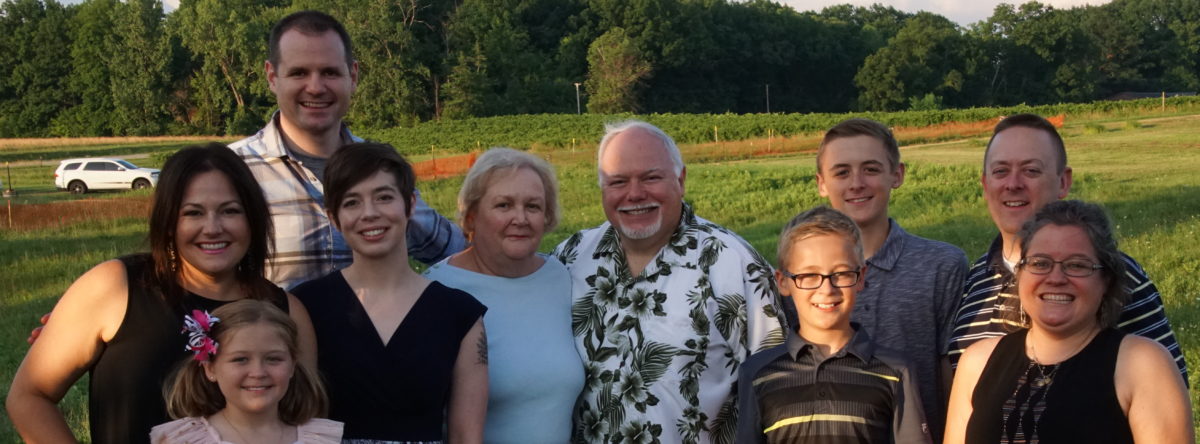
Political Discourse: Improvement Starts with Us

People who pass our house can’t help but notice that we have a campaign sign on our front lawn. Obviously, we have staked out a position in the upcoming election. I don’t pretend to start this post from a position of political neutrality–as if such a thing were even possible.

I recently took part in a discussion of parishioners at which it became clear that some were disgusted by politics, some were perplexed by the choices available, and all were concerned about our moral responsibilities as we face a month of voting. In one way or another, all of us were trying to answer the same question: as a voter of faith, what are my obligations as a citizen?

As might be expected, the Contrarian has some thoughts.

Continue reading “Political Discourse: Improvement Starts with Us”
Okay, Zoomer.

Zoom has been wildly popular in the time of the pandemic shutdown–to the point where it’s become a generic catchall for all videoconferencing technology. (In fact, that’s how I’ll use it here: for “Zoom,” please substitute whatever system for videoconferencing you are presently using.)

And there’s a good chance you’re using one. People are using it for deliberative meetings, for casual video calls, and for playing Pictionary with their family members. In my family, we’re using Zoom, Skype, Duo, and FaceTime depending on the people involved.

Within a few weeks after the pandemic shutdown, Zoom memberships expanded twentyfold, and if you needed technical support you were in big trouble. After hackers started providing infantile demonstrations of their prowess, security revisions to the Zoom platform forced users to re-learn how to administer their systems.

But this post isn’t about that; really, it isn’t about Zoom at all. It’s about what happens when a technology challenges the status quo.

Continue reading “Okay, Zoomer.”

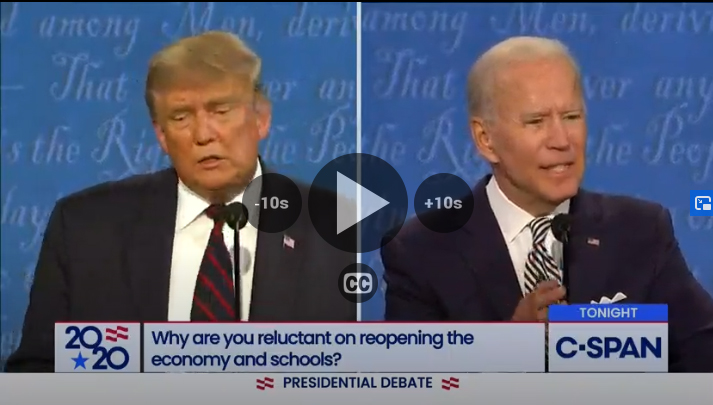
The Cleveland Debate

One candidate came to debate. The other came to disrupt.

I don’t have much interest in political labels: to me, they are points of the political compass and that’s about all. And although I do claim a political party, I no longer have an official role in that party. The parties have become political tribes.

The debate didn’t provide voters with information about issues: the positions of the candidates are not one iota clearer today than they were before the debate.

What the debate did do is to provide voters with a clear view of the characters of the candidates. One candidate displayed a pathological lack of self-control. He victimized the other candidate, the moderator, and the viewers by refusing to participate in dialogue: by introducing irrelevant topics, by interrupting, and by refusing to follow norms of conversation, he thwarted any real exchange of information and examination of positions.

Continue reading “The Cleveland Debate”